
Scroll

About ECAS
Featured
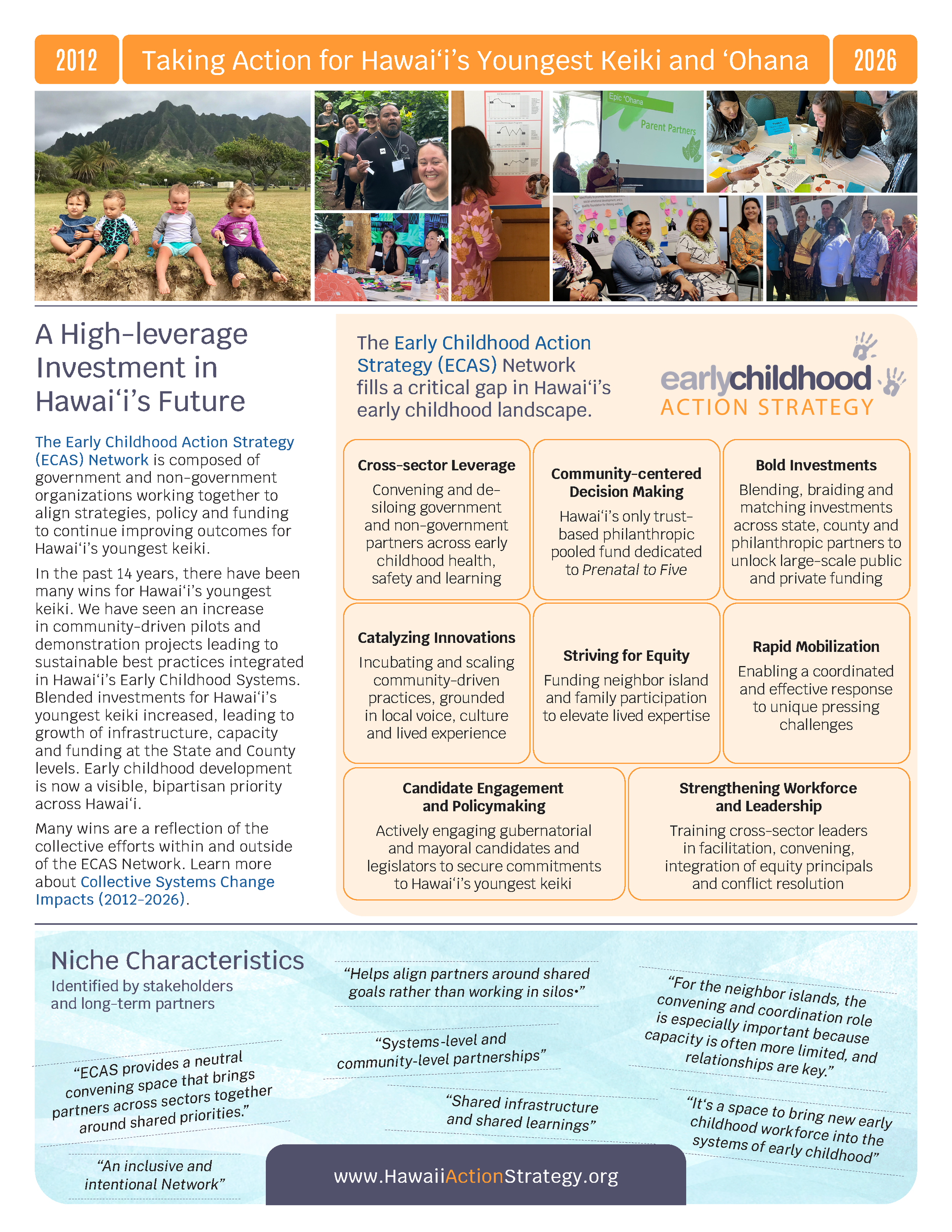
The Early Childhood Action Strategy (ECAS) Network fills a critical gap in Hawai‘i’s early childhood landscape.
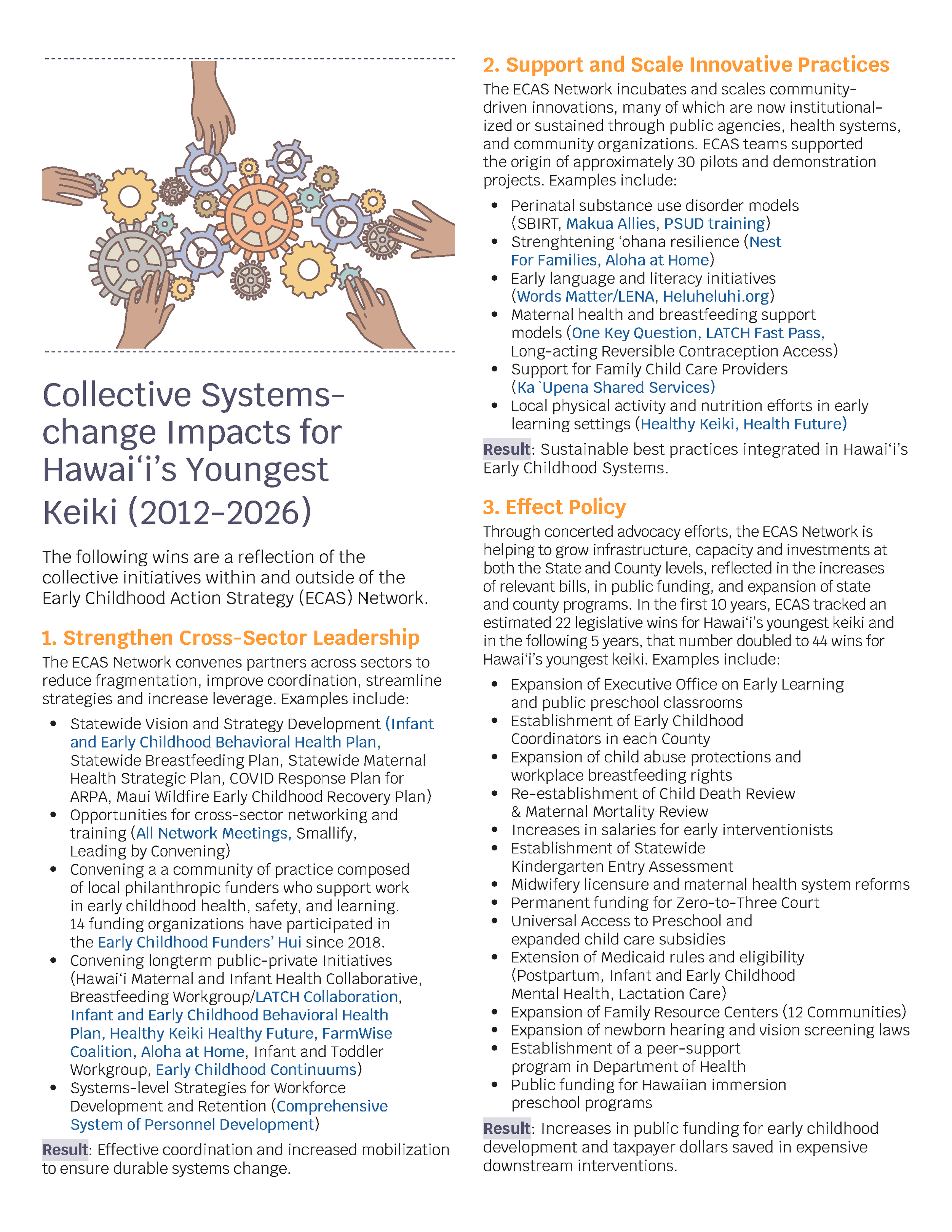
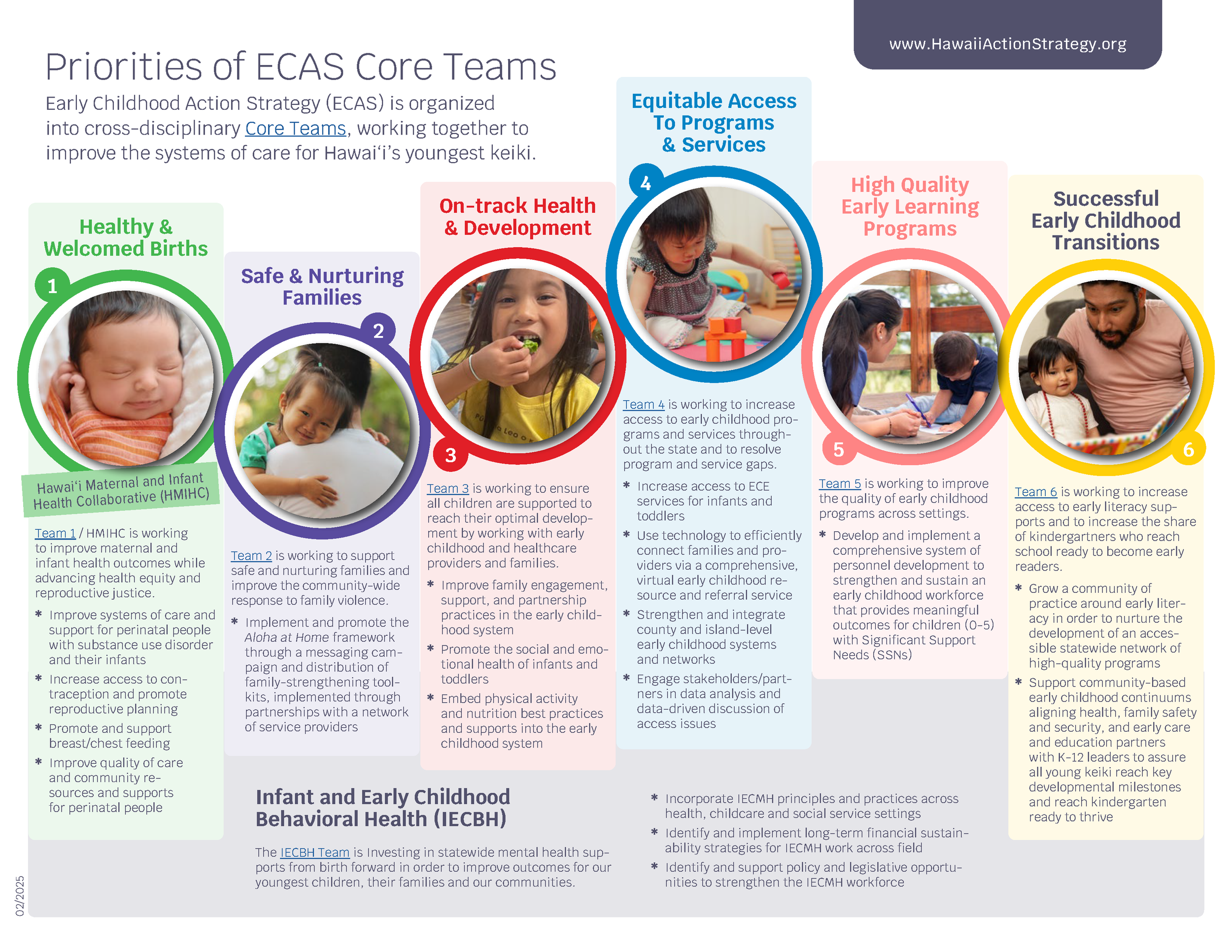
Early Childhood Action Strategy (ECAS) takes action for Hawai`i’s children by bringing together diverse stakeholders to implement systems-level strategies. All efforts involve multiple government and nongovernment partners across the network.
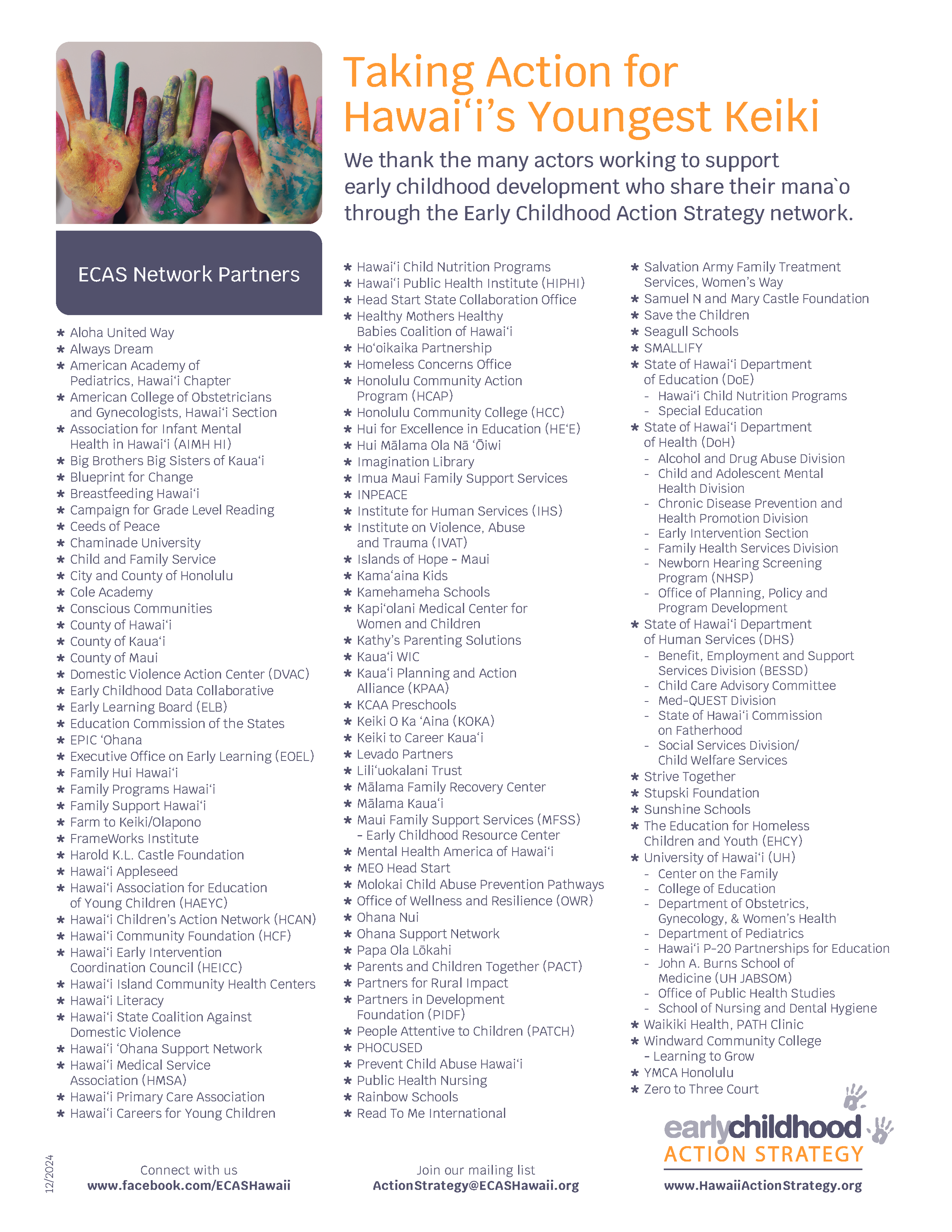
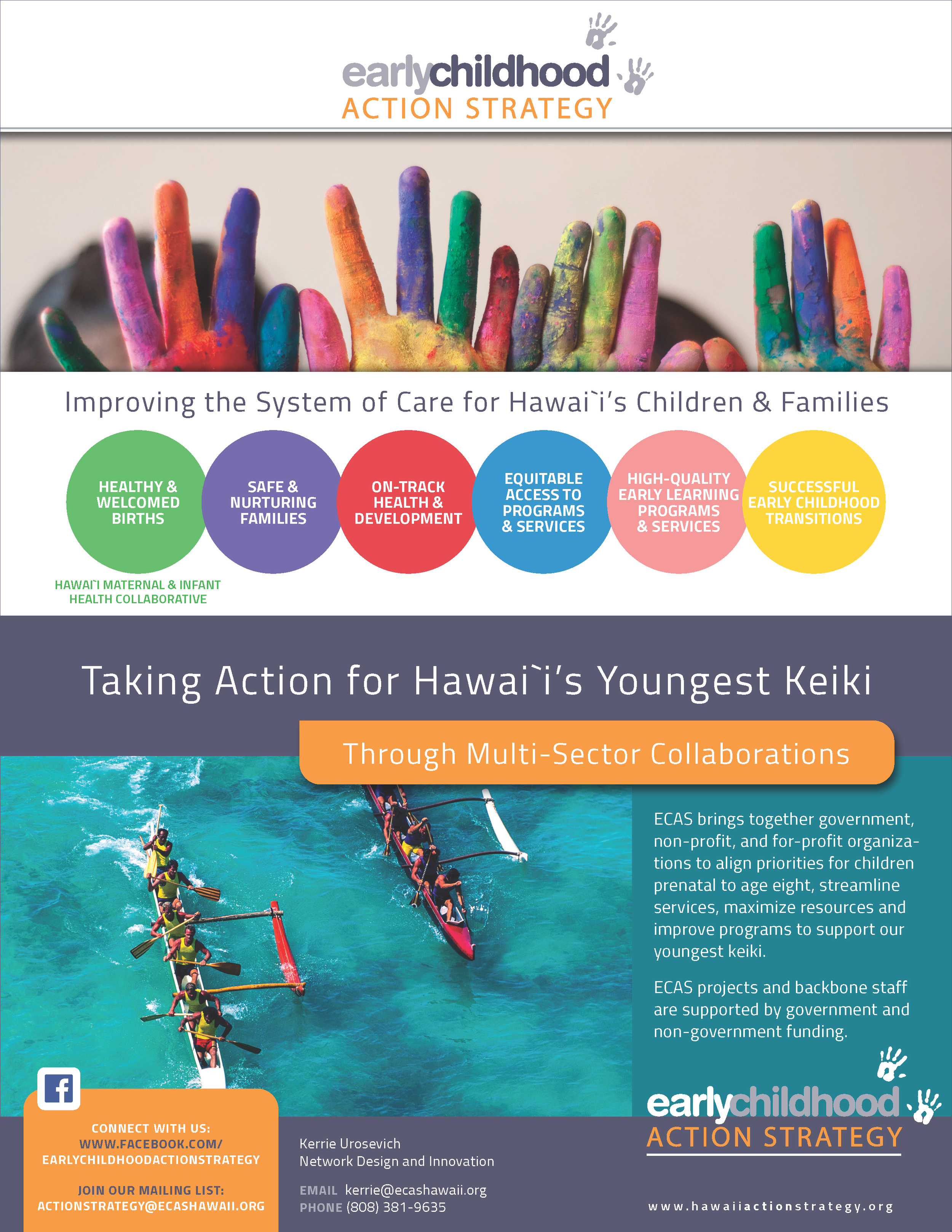
About ECAS - One Pager
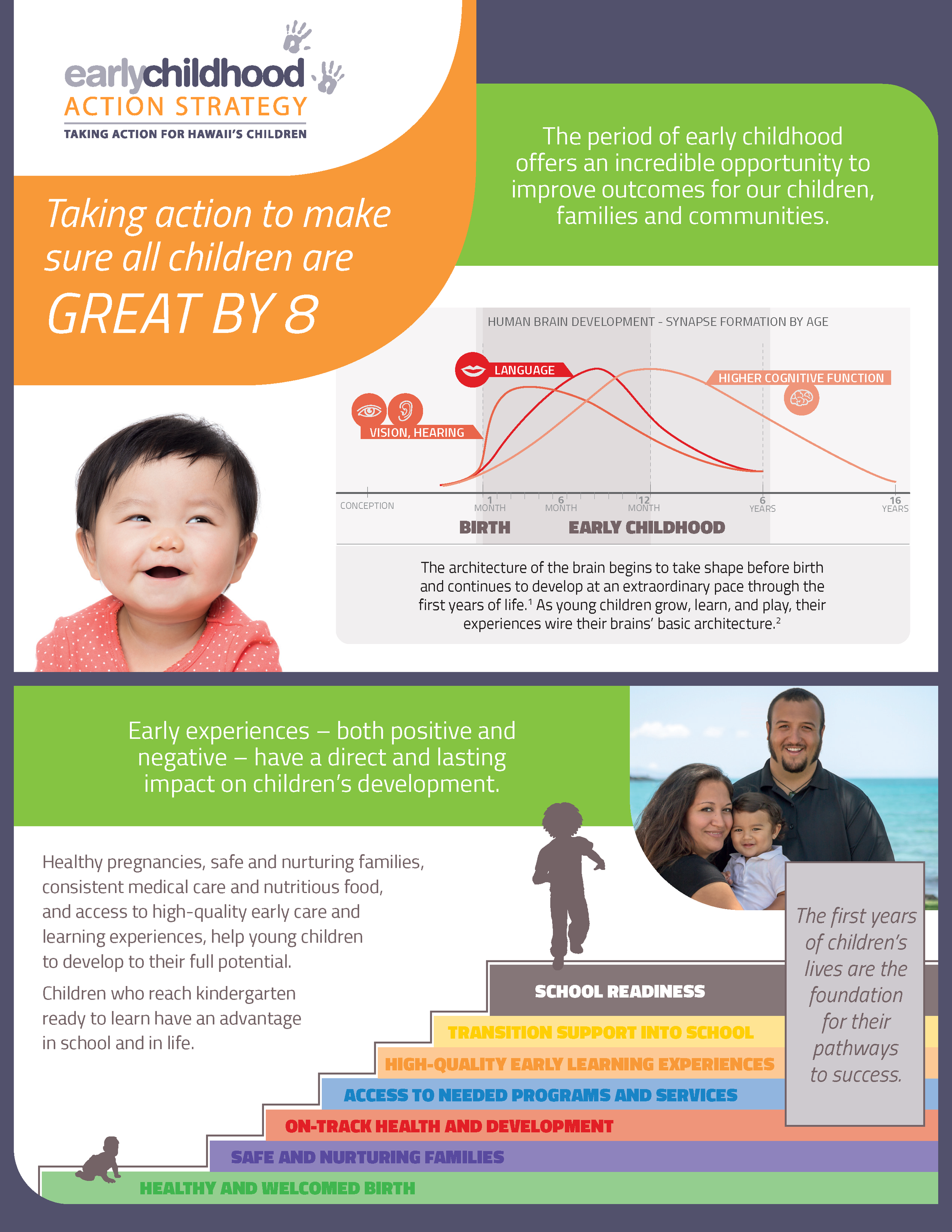

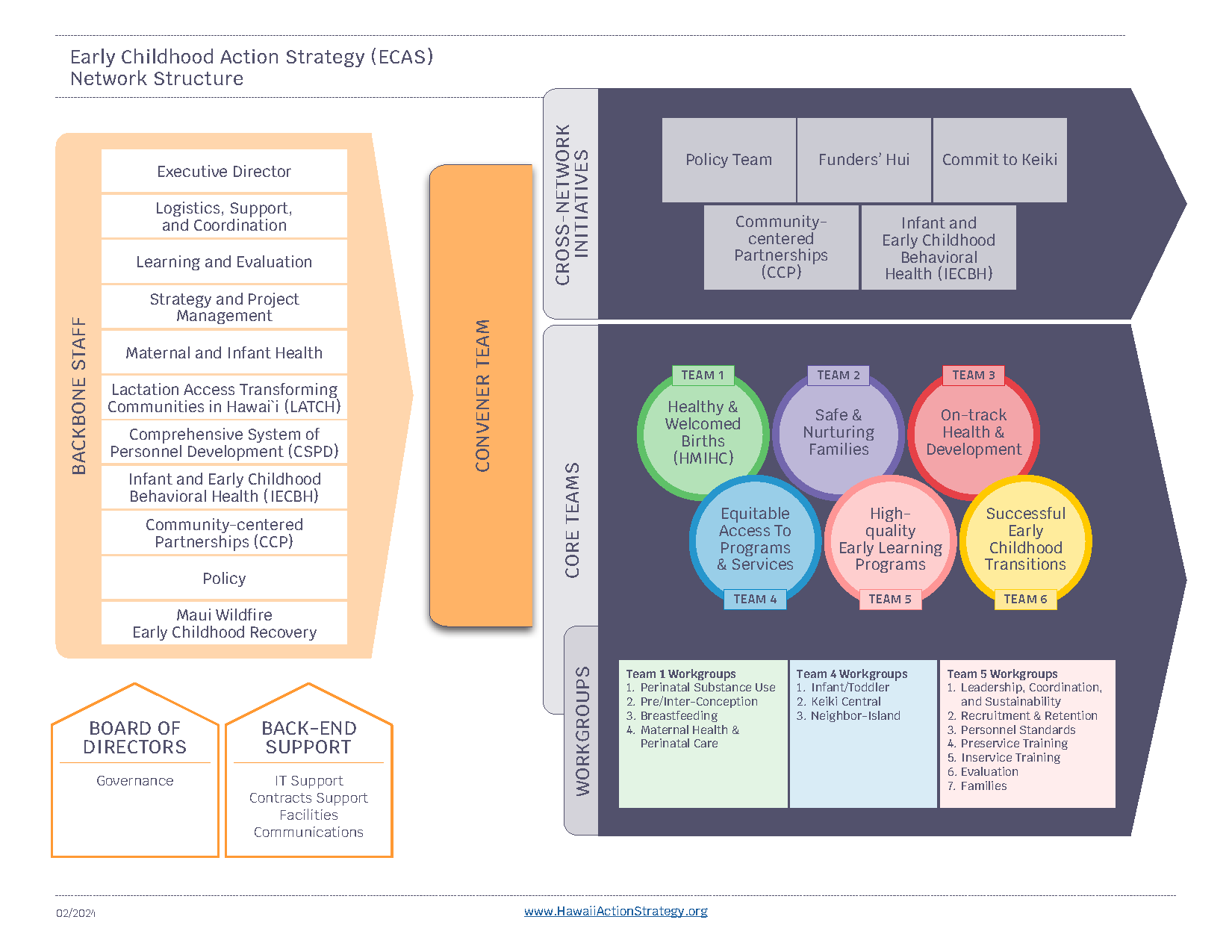
Publications
Featured
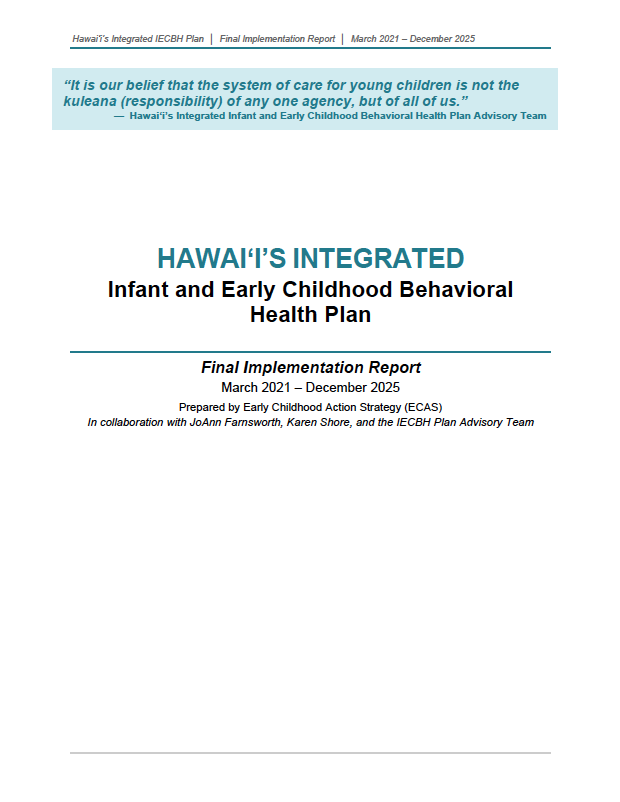
This report documents the cross-sector commitment by dozens of organizations and hundreds of individuals who believe that Hawaiʻi could—and should—fundamentally transform how we support the behavioral health of our youngest children and their families. We celebrate the planning and development of the Hawaiʻi Integrated Infant and Early Childhood Behavioral Health Plan (IECBH) and four years of initial implementation. Learn about key accomplishments, strategic recommendations for the future, and challenges and lessons learned.
There is consensus that a strong foundation has been built and that the job is not yet done.
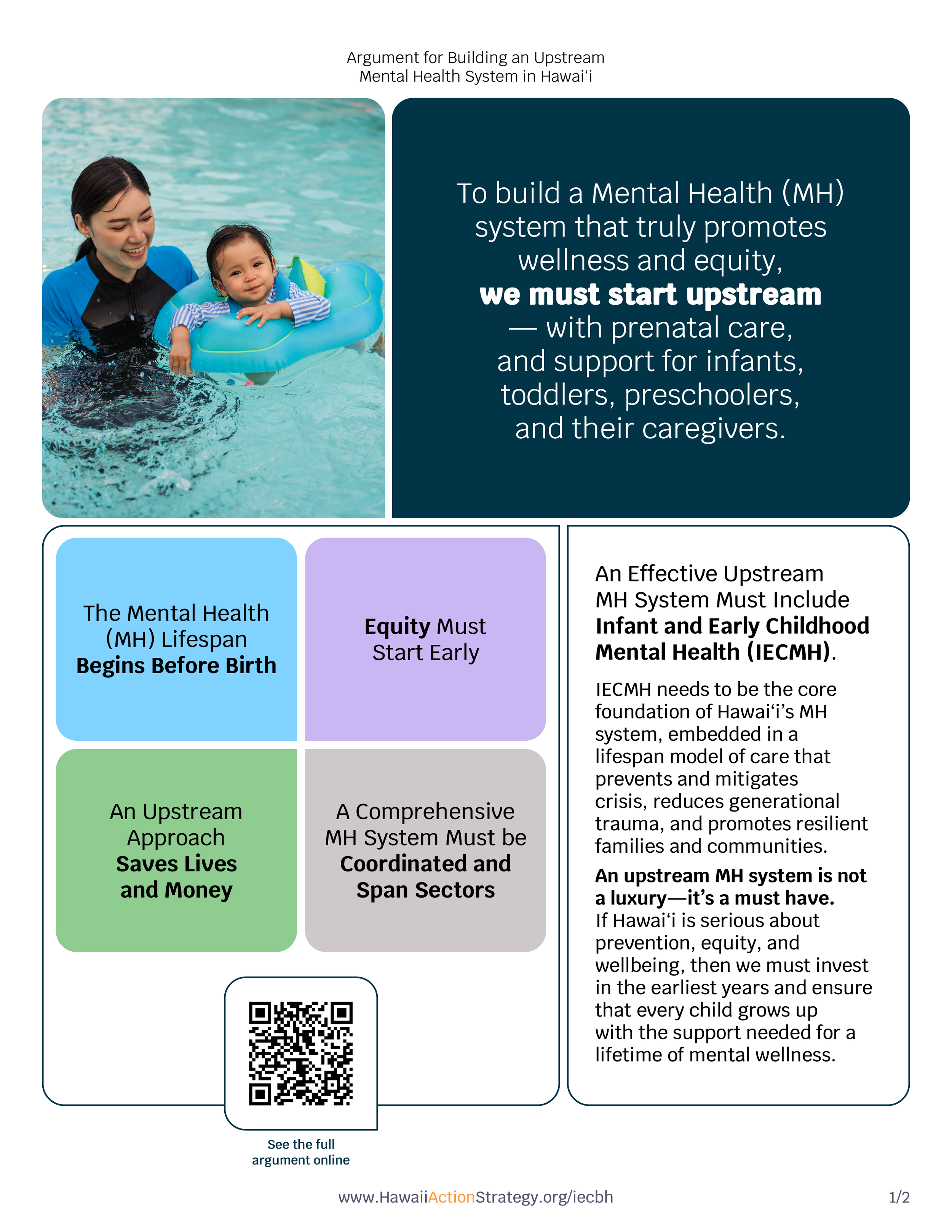
An Effective Upstream MH System Must Include Infant and Early Childhood Mental Health (IECMH).
IECMH needs to be the core foundation of Hawai‘i’s MH system, embedded in a lifespan model of care that prevents and mitigates crisis, reduces generational trauma, and promotes resilient families and communities.
An upstream MH system is not a luxury—it’s a must have.
If Hawai‘i is serious about prevention, equity, and wellbeing, then we must invest in the earliest years and ensure that every child grows up with the support needed for a lifetime of mental wellness.
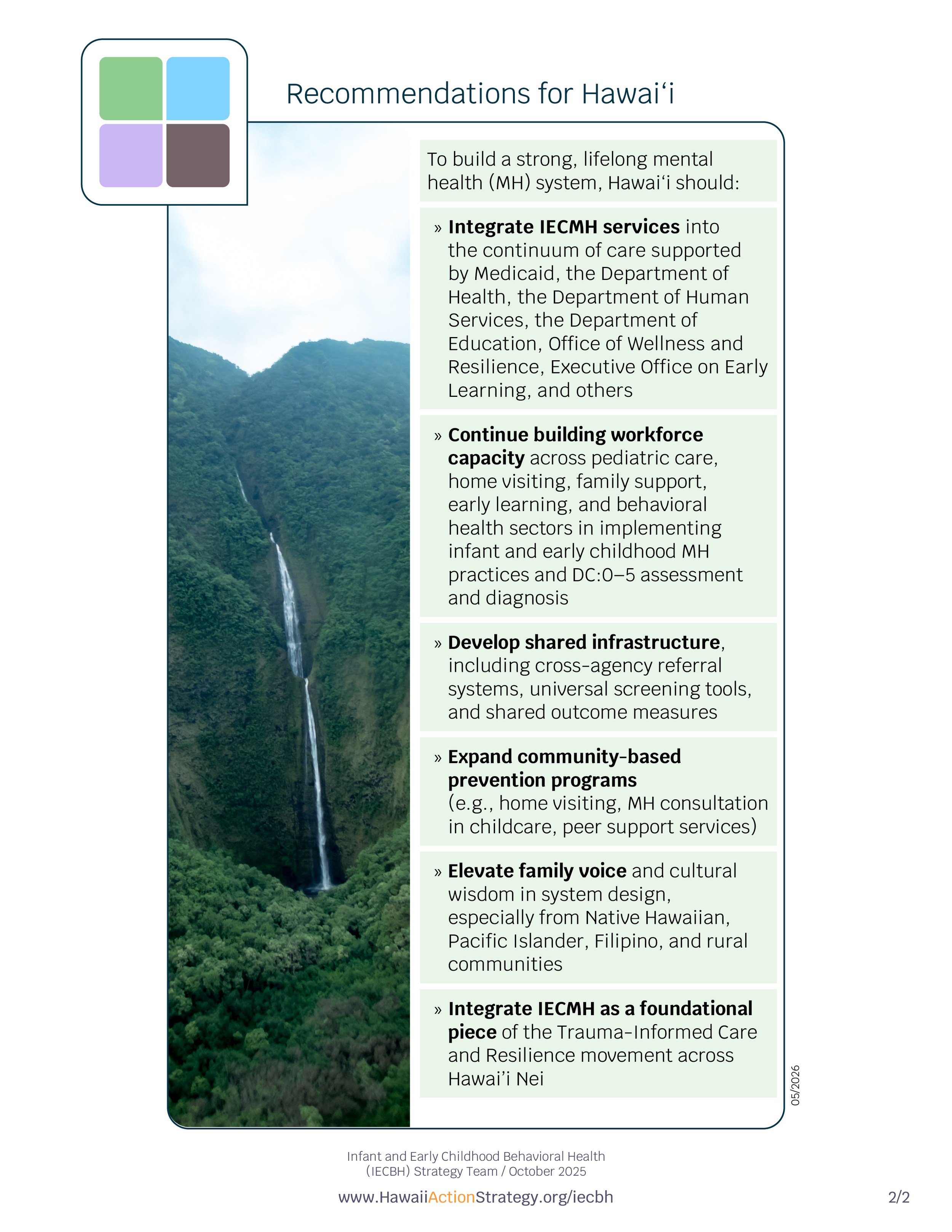
To build a strong, lifelong mental health (MH) system, Hawai‘i should:
Integrate IECMH services into the continuum of care,
Continue building workforce capacity,
Develop shared infrastructure,
Expand community-based prevention programs,
Elevate family voice and cultural wisdom in system design,
Integrate IECMH as a foundational piece of the Trauma-Informed Care and Resilience movement across Hawai’i Nei

The statewide Promising Minds Provider survey gathered insights from more than 300 pediatric, primary care, and mental health providers caring for children ages zero through five. Through this effort, we were able to collect critical data on the current state of mental health services for young keiki in Hawai‘i and gaps in care.

Trauma-Informed Care: A Request for Your Support
Consider legislation that promotes trauma-informed practices across state agencies and service providers; and reduces re-traumatization by protecting against dynamics that may replicate trauma.
Advocate for policies that strengthen holistic well-being, disrupt collective and intergenerational cycles of harm, prevent and heal trauma, and build resiliency for Hawai'i's people from infancy and early childhood through adulthood.
Support funding for research on trauma and effective trauma-informed interventions.

Version 2.1, Updated February 2025
This Integrated Infant and Early Childhood Behavioral Health (IECBH) Plan proposes to integrate child and family mental health and trauma-informed care into our health and early care and learning systems throughout Hawaiʻi. This integration will create an intentionally aligned child and family-serving system that promotes school readiness and family success. This plan outlines a way to move forward with shared goals and actions progressing over multiple years. It provides a path for organizations and individuals to collectively work towards creating equitable systems of care that reduce racial and socioeconomic disparities, ultimately ensuring that all children succeed in school and life.


Thanks to substantial support from Hawai‘i County Government, the Stupski Foundation and The Omidyar Group, the Pāhoa Promise is expanding or launching a wide range of initiatives to support the development and kindergarten readiness of young keiki in Pāhoa.

The Waimānalo Early Education ‘Upena brings together health care providers, family support services, school leaders, early childhood educators, and families and community members to create strong pathways for all keiki to reach kindergarten healthy, safe and ready to thrive. The ‘Upena is building a collective response to community identified priorities.

Issue Briefs
ECAS Issue Briefs
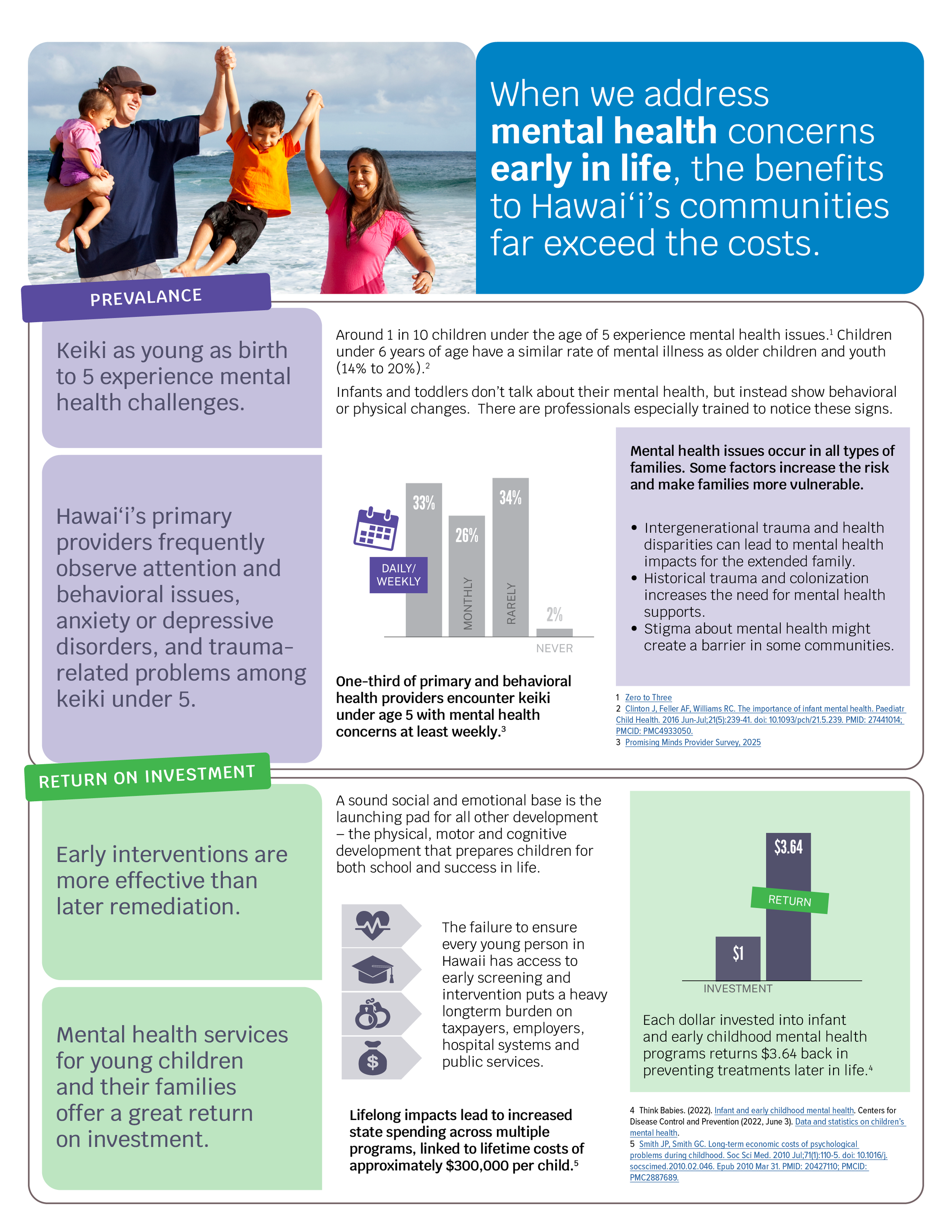
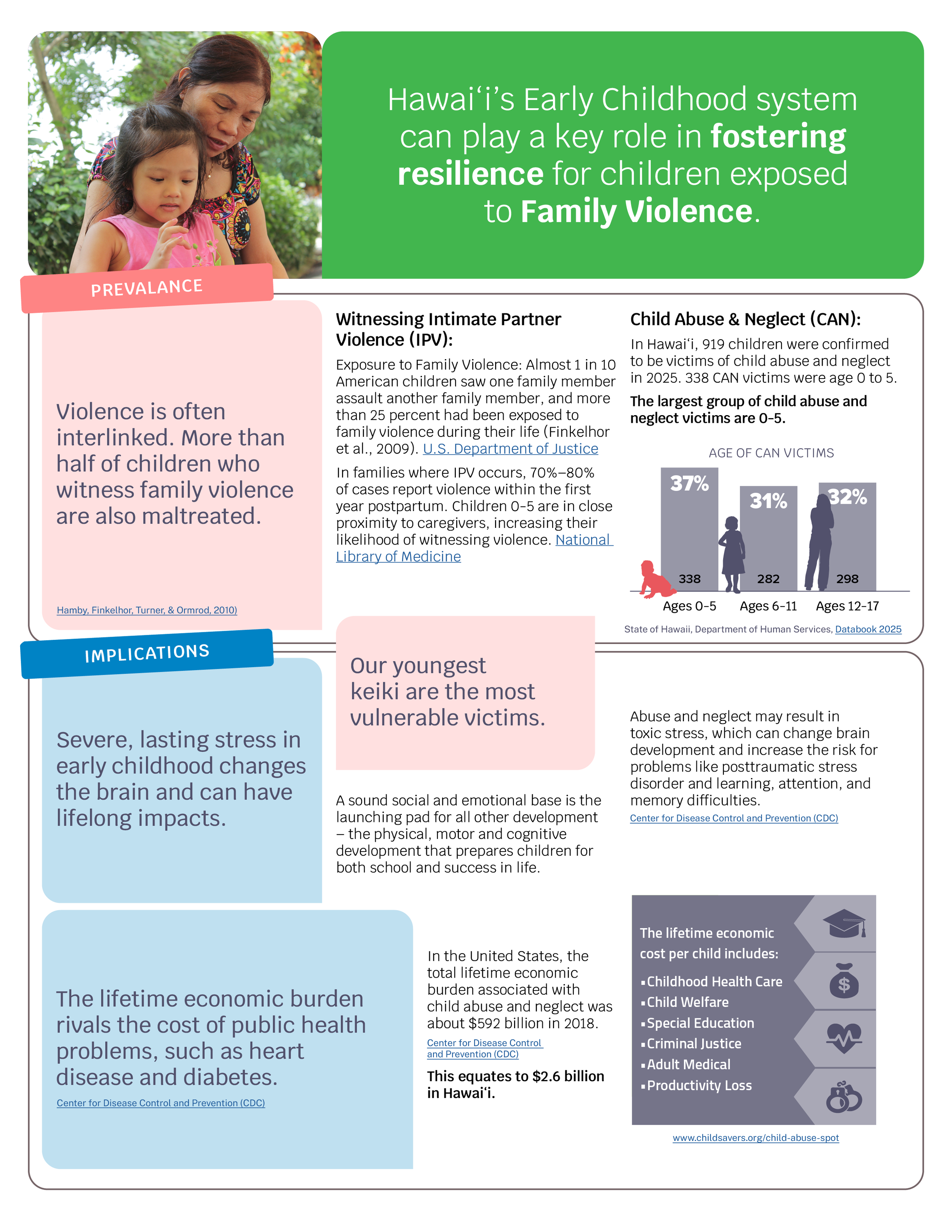
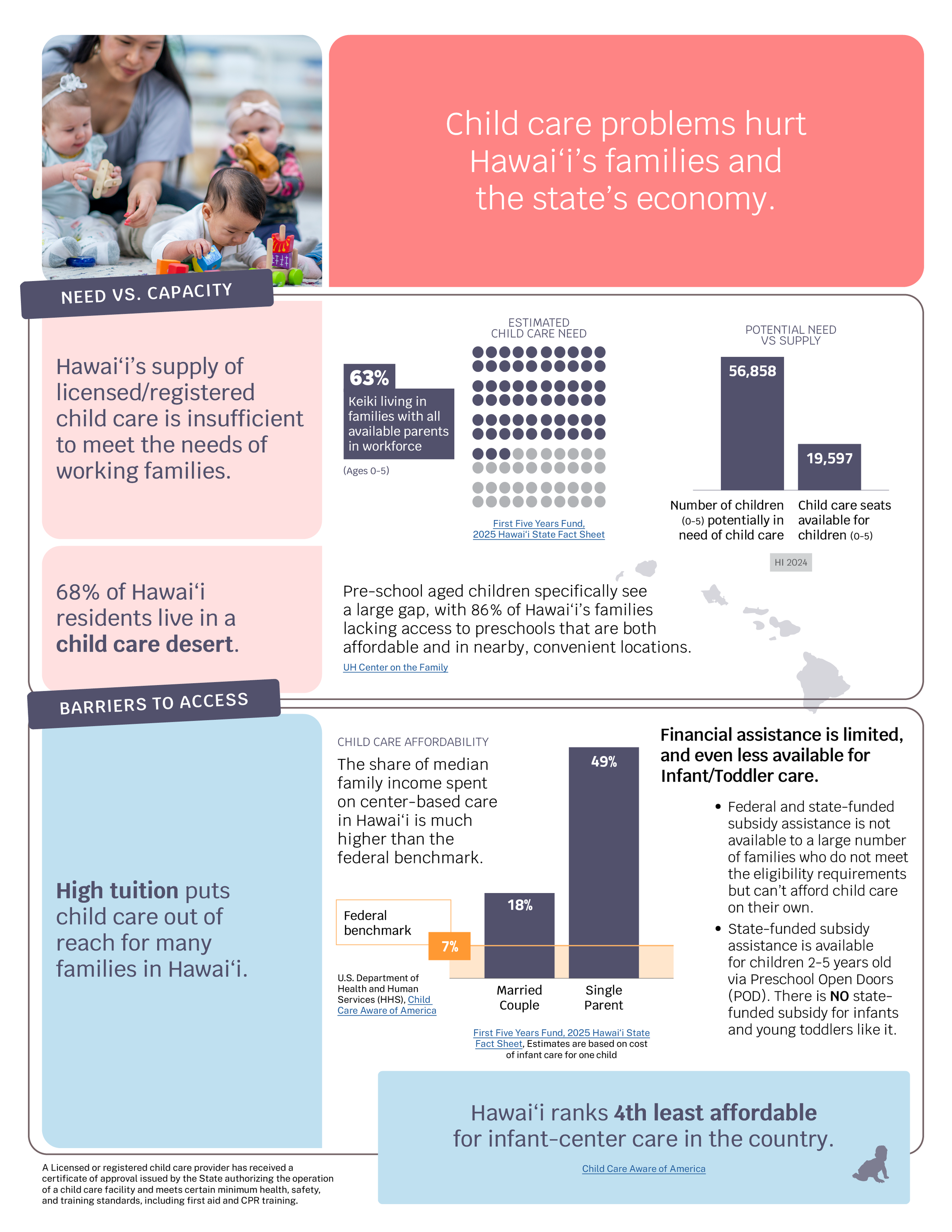
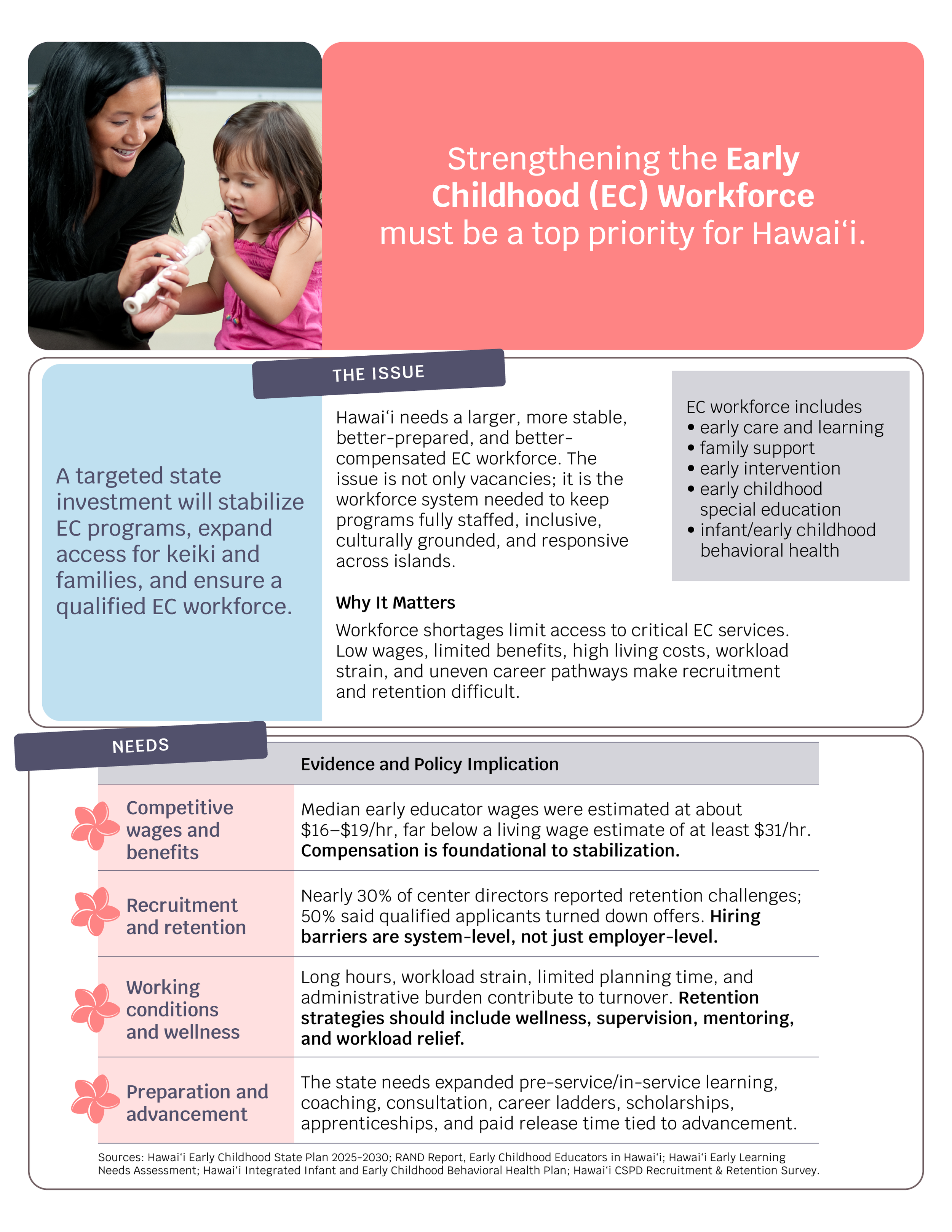

Many young keiki in Hawai‘i reach school at a disadvantage. Statewide, kindergarten readiness scores are lowest in the Language & Literacy domain. Readiness gaps become academic achievement gaps and grow wider over time. Early childhood experiences matter for school readiness and success.
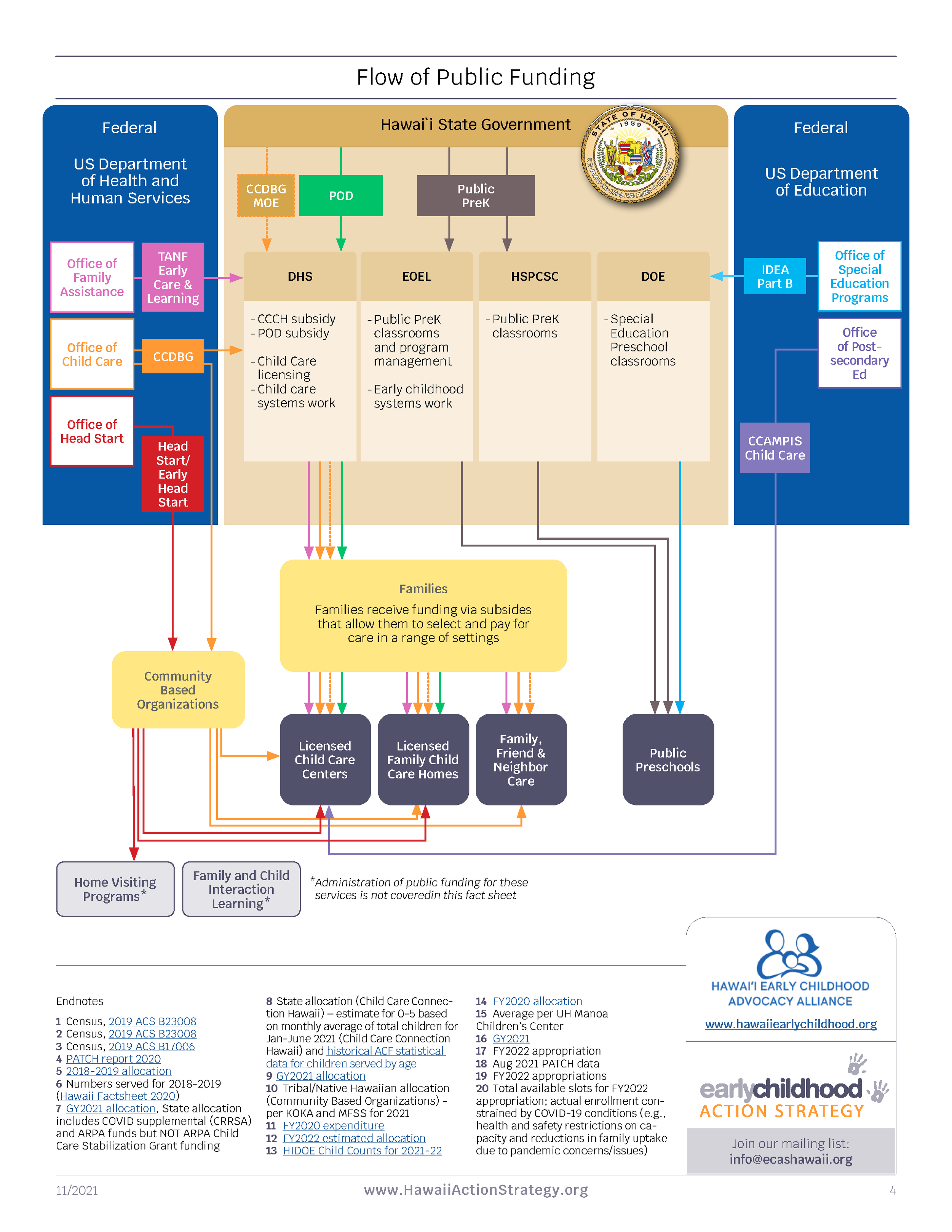
Expanding public investment is critical to increasing access to early care and learning opportunities to meet the state’s high needs. Federal and state funding plays a pivotal role in building capacity, improving quality, and reducing the financial burden for families. The information in this primer provides a general overview of the majority of available public funding for child care and early learning programs in Hawai`i and the flow of these funds.

Food insecurity can harm individuals of any age, but it can be especially devastating to young children.

Corporal punishment harms children.
In 1973 Hawai‘i became the third State to ban corporal punishment in schools. With the accumulating evidence on the harms of corporal punishment, there is a clear path to legislative action to have us again lead the United States in eliminating the purposeful infliction of pain on children.


Supporting employees’ child care needs supports businesses’ bottom line. Providing child care supports to workers is less expensive than many employers believe because the provision of child care assistance is tax-deductible to employers.
Reports / Updates
2025Reports
2025 Stories of Systems Change Efforts
ECAS Network teams and partners started expanding their story telling efforts to capture a wide range of Actions for Our Youngest Keiki and to elevate the voices of those involved.
We are continuously revising and improving our efforts to track and document the wide range of efforts across the ECAS Network.
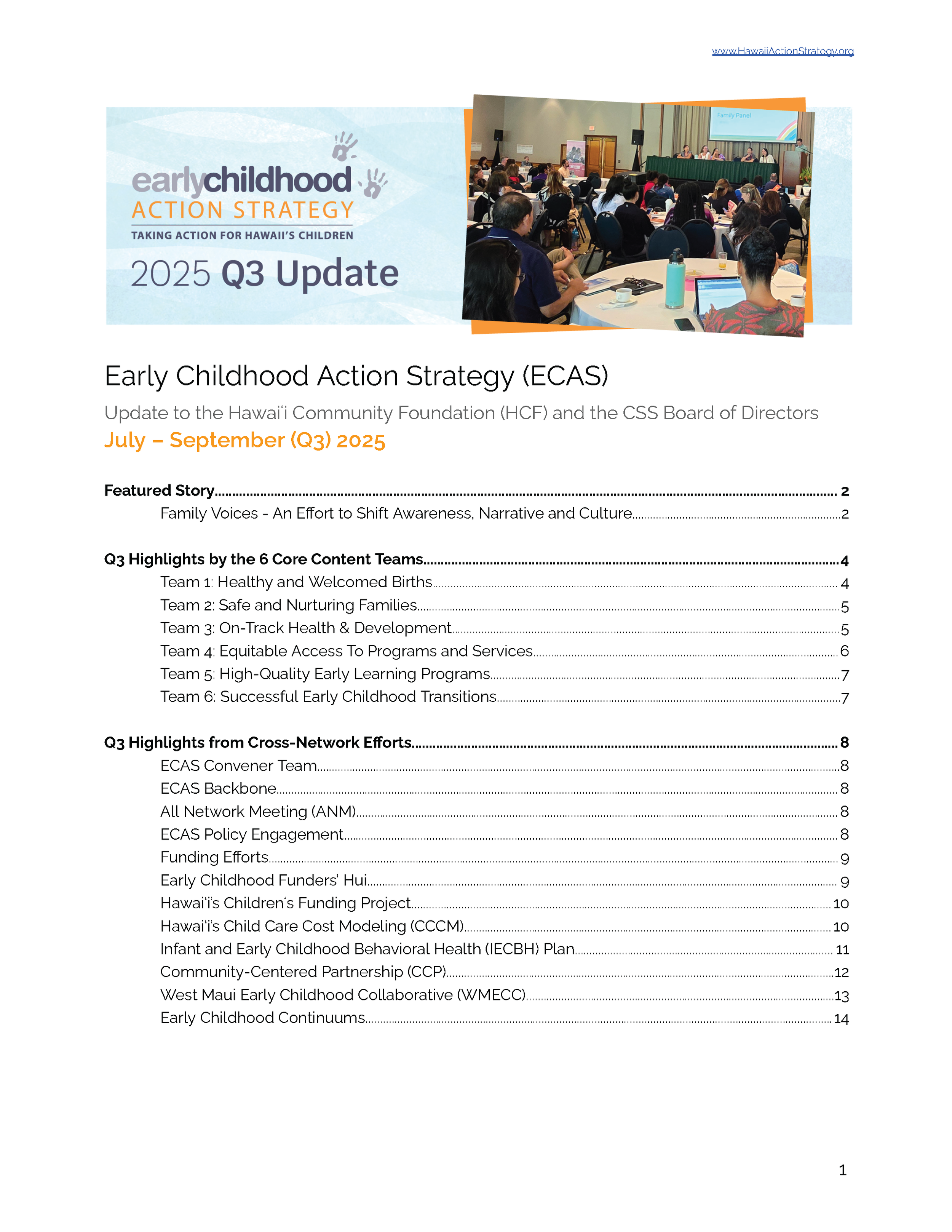
This Update summarizes highlights from Q3 efforts across the Network.
Featured Story: Family Voices - An Effort to Shift Awareness, Narrative and Culture
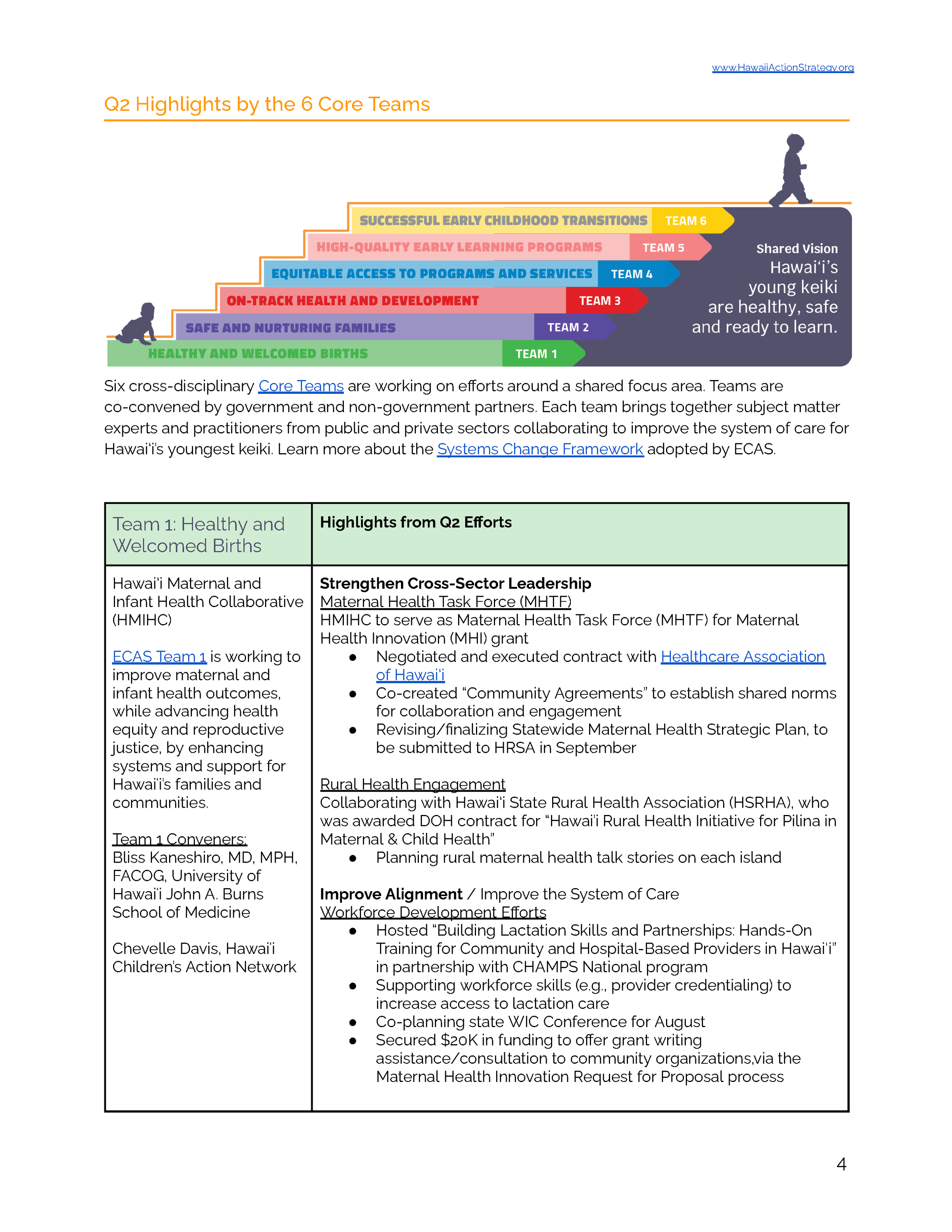
This Update summarizes highlights from Q2 efforts across the Network.
Featured Story: Effect Policy: Recap of the Hawaiʻi State 2025 Legislative Session
Celebrating 10 Years of Actions For Keiki
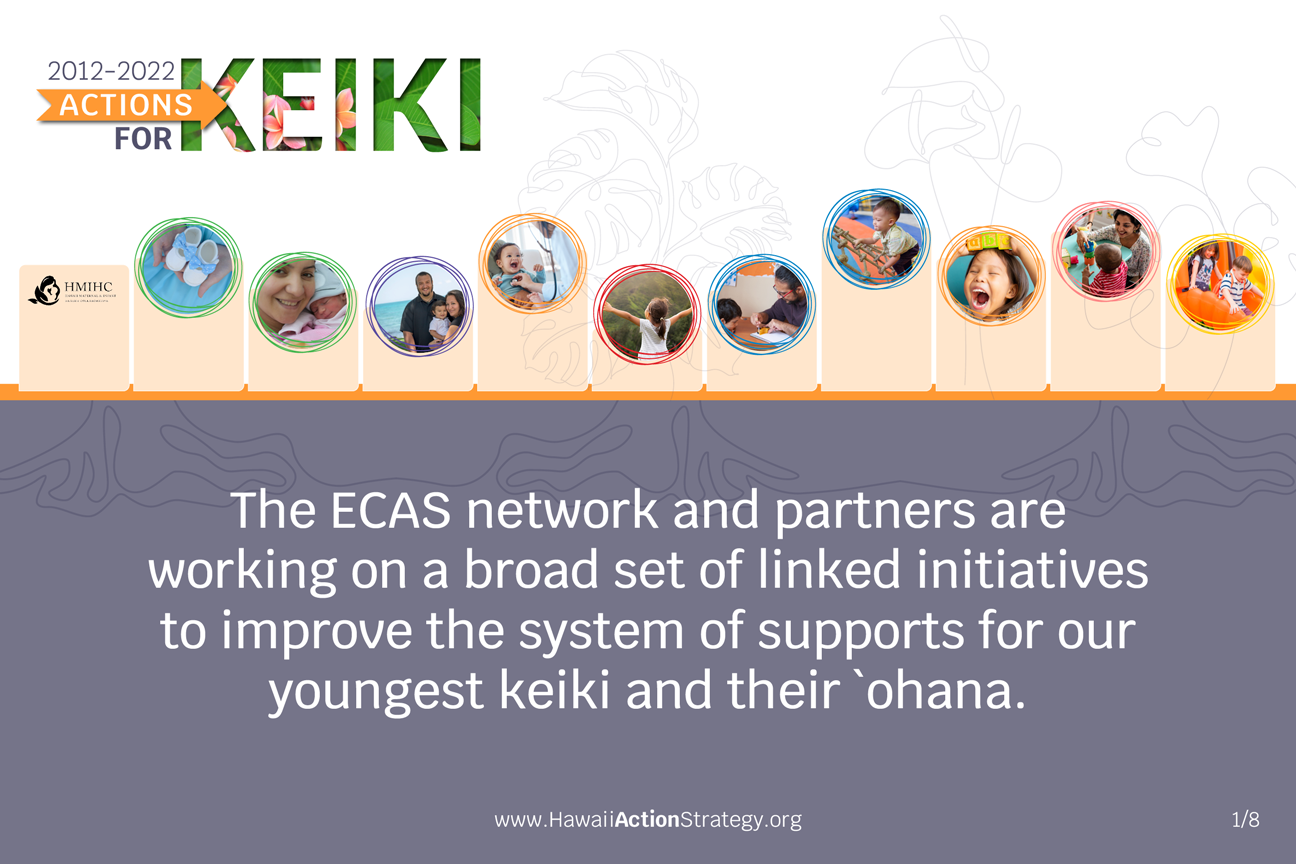
10Yrs Actions For Keiki
10Yrs Policy Wins For Keiki